7 Benefits of an EIN for Freelancers and LLC Owners (2026)
Table of Contents
Short answer: An EIN (Employer Identification Number) is a free, nine-digit business tax ID from the IRS. Freelancers and single-member LLC owners without employees often aren’t required to have one, but getting one takes about 15 minutes online and brings real benefits: you stop handing your Social Security number to every client, opening a business bank account is easier, and you’re ready to hire, open a Solo 401(k) or elect S corp status later.
Last updated: November 2026. General information for U.S. freelancers, sole proprietors and single-member LLC owners, not tax or legal advice.
What is an EIN?
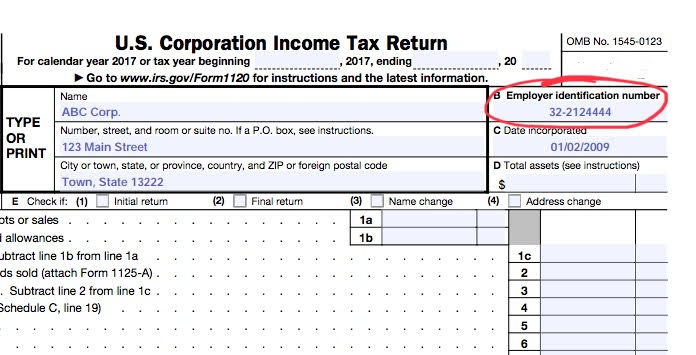
An EIN, also called a Federal Tax Identification Number, is the number the IRS uses to identify a business. It has nine digits in the format XX-XXXXXXX (see what an EIN looks like). It never expires, and the IRS issues it at no cost. Any website that charges you for an EIN is charging for a service you can do yourself on IRS.gov.
Who is required to have an EIN?
Under IRS rules, you need an EIN if any of these apply:
- You have employees (including yourself as an S corp shareholder-employee).
- Your business is a corporation or partnership, or a multi-member LLC.
- You file employment, excise, or alcohol, tobacco and firearms tax returns.
- You withhold tax on income paid to a nonresident alien.
- You have a Keogh or other qualified retirement plan (many Solo 401(k) providers also ask for one).
A sole proprietor or single-member LLC with no employees and none of the above can legally use their Social Security number. That’s where the benefits below come in. Full details: Do I need an EIN and how to get one.
7 benefits of an EIN
1. You stop sharing your Social Security number
Every client that pays you $2,000 or more in 2026 will ask for a Form W-9 so they can send you a 1099-NEC (the threshold rose from $600 starting with 2026 payments). Without an EIN, that W-9 carries your SSN, and it sits in the files and inboxes of every client you’ve ever had. Putting an EIN on the W-9 instead keeps your SSN out of circulation and lowers your identity theft risk.
2. Opening a business bank account is easier
Some banks let sole proprietors open a business account with an SSN, but most require an EIN for an LLC, and nearly all ask for one if your business has a different legal name. A separate account is the single best way to keep business and personal money apart at tax time. See what you need to open a business bank account.
3. It looks more professional to clients
Larger clients often prefer to work with vendors that have a business tax ID. It signals you run a real business, which can also help support independent contractor status rather than looking like a disguised employee.
4. It helps you build business credit
Business credit bureaus and many lenders and card issuers tie your business file to its EIN. Building a record under the business, rather than only your personal credit, makes later small business loans and vendor credit easier to get.
5. You’re ready to hire
You can’t run payroll without an EIN. Having one in place means you can bring on your first employee without a scramble.
6. You can open a Solo 401(k) and elect S corp status
A Solo 401(k) lets you put away up to $72,000 for 2026, and most providers ask for an EIN to open the plan. If your profit grows past roughly $50,000 to $60,000 a year, an S corp election can cut self-employment tax, and that also requires an EIN because you’ll be paying yourself through payroll.
7. It’s free and permanent
There’s no fee, no renewal and no annual filing just for having an EIN. The cost is about 15 minutes.
How to get an EIN in 2026
- If you’re forming an LLC, register it with your state first. The IRS warns that applying before the entity exists can delay your EIN.
- Go to the IRS online EIN application, open Monday to Friday, 7 a.m. to 10 p.m. Eastern time.
- Have the responsible party’s SSN or ITIN ready. Your business must be located in the U.S. or a U.S. territory.
- Finish in one sitting. You can’t save a partial application and the session times out after 15 minutes of inactivity.
- Download and save your confirmation letter (CP 575) as soon as the number is issued.
Online is instant. Applying by fax with Form SS-4 takes about four business days, and by mail about four weeks. Step-by-step: how to apply for an EIN.
Frequently asked questions
Does a single-member LLC need an EIN?
Not for federal income tax if it has no employees and no excise tax obligations, because the IRS treats it as a disregarded entity. In practice, most banks and many states ask for one, so most LLC owners get one.
Does an EIN replace my SSN on my tax return?
No. As a sole proprietor or single-member LLC, you still file Schedule C and Schedule SE with your personal Form 1040 under your SSN. You can enter your EIN on Schedule C, line D.
How much does an EIN cost?
Nothing when you apply directly with the IRS.
Does an EIN expire?
No. If you close the business, you can ask the IRS to close the business account, but the number is never reassigned.
Sources
Related: Do I need a business bank account? · LLC vs sole proprietorship · How to start an LLC
Was this article helpful?

I used to travel a lot for work. Doing my expenses frustrated me. I would delay submitting them and when I did, I would spend hours taping receipts to paper to scan for my boss. I knew there was a better solution, and I had a background in productivity software, so I created Falcon Expenses. I enjoy creating software that makes people’s lives easier.
In addition, I’m an avid skier and I enjoy hiking, sailing, and cooking.