Do you have to keep paper receipts for taxes?
Table of Contents
Read this article if you’re a small business, self employed, or freelancer and want to know, do you have to keep paper receipts for taxes?
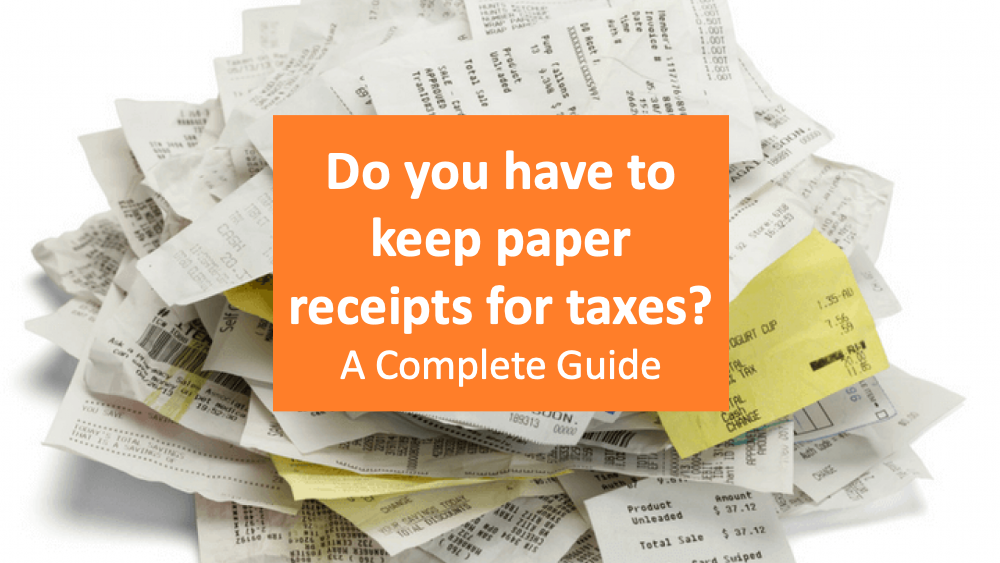
Do you have boxes full of paper receipts?
Small business owners, self-employed, freelancers, independent contractors, or any taxpayer has at one point wondered if they need to hang on to their paper receipts.
Most of you have probably asked yourself, do you need original receipts for tax purposes?
If you’ve asked yourself this question then you definitely want to keep reading this article.
Do you have to keep paper receipts for taxes?
The IRS doesn’t mention anything about keeping paper receipts except in one case. See more details on that below. In fact, the IRS says, “Electronic information management has become the standard in the private sector… instead of continuing to use traditional paper books”.
Related: The Complete List of Small Business and Self Employment Tax Write Offs
What does the IRS require you to keep?
The IRS requires you to keep the following records:
- Who you paid
- Date
- Amount
- What it was and its business purpose
Basically, what you bought, when you bought it, and for how much. There is no mention of paper receipts at all. So go right ahead and keep a digital record of your business expense purchases for taxes. Check out this article for a complete list of IRS expense record-keeping requirements for all expense types,
When do you have to keep paper receipts for taxes?
The $75 rule people quote is real, but it isn’t about paper, and it only covers travel, meals, gifts and transportation. IRS Pub 463 says you need a receipt (documentary evidence) for any of those expenses of $75 or more, and for lodging at any amount. Under $75, a written log of the amount, date, place and business purpose is enough. A scan or photo of the receipt satisfies the rule. For every other expense (software, supplies, equipment), keep whatever shows what you paid and what it was for: a receipt, invoice or order confirmation, digital or paper.
What to do if you get audited?
Scanned or photographed receipts count the same as paper ones, as long as the images are legible, complete and you can produce them when asked (Rev. Proc. 97-22). A bank or credit card statement proves you paid and how much, but not what you bought. Pair it with the receipt image, or a note of what it was and why it was for business, and you’re covered.
Conclusion
Stop hoarding paper receipts. Instead, scan or photograph them and store the images somewhere safe and searchable. Here’s how to set up simple business receipt management.
Was this article helpful?

I run the Falcon Expenses blog, an independent resource for freelancers and single-member LLC owners. We cover taxes, deductions, LLC setup and the paperwork that comes with working for yourself, in plain English.
In addition, I’m an avid skier and I enjoy hiking, sailing, and cooking.